


The world map has undergone significant changes throughout history, with the rise and fall of nations, empires, and territories. While some countries have stood the test of time, others have vanished from the map, leaving behind a rich tapestry of history and stories. In this exploration, we delve into seven countries that no longer exist, unraveling the events and circumstances that led to their disappearance.
Yugoslavia
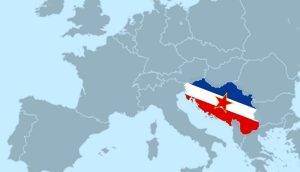
Period of Existence: 1918–1992/2003
Yugoslavia was a complex federation of South Slavic states that emerged after World War I. It consisted of six republics: Serbia, Croatia, Slovenia, Bosnia and Herzegovina, Montenegro, and Macedonia. However, internal ethnic tensions, economic struggles, and political upheaval led to its disintegration in the early 1990s.
What Happened? The disintegration of Yugoslavia began in the early 1990s with the rise of nationalist sentiments. Slovenia and Croatia declared independence in 1991, leading to the Ten-Day War. This was followed by the brutal Croatian War of Independence and the Bosnian War. Eventually, Macedonia, Montenegro, and Kosovo also sought independence.
The violence and ethnic conflicts resulted in widespread suffering and loss of life. The Yugoslav Wars, which lasted until 2001, culminated in the dissolution of Yugoslavia. Today, the region consists of independent nations like Croatia, Slovenia, Bosnia and Herzegovina, Montenegro, North Macedonia, and Kosovo.
East Germany (German Democratic Republic)
Period of Existence: 1949–1990
At the end of World War II, Germany was divided into two occupied zones: East and West Germany. The German Democratic Republic (East Germany) was established in the Soviet-occupied zone, while the Federal Republic of Germany (West Germany) was created in the zones occupied by Western Allies.
What Happened? The fall of the Berlin Wall in 1989 symbolized the end of the division. As protests for reunification grew, the governments of East and West Germany pursued negotiations. On October 3, 1990, the reunification of Germany was formally completed, leading to the dissolution of the German Democratic Republic.
Czechoslovakia
Period of Existence: 1918–1992

Czechoslovakia was formed after World War I, consisting of the regions of Bohemia, Moravia, Slovakia, and Subcarpathian Ruthenia. It was a democratic and industrially advanced state in Central Europe.
What Happened? In the late 1980s, as communist regimes across Eastern Europe crumbled, Czechoslovakia experienced a peaceful transition to democracy known as the Velvet Revolution. However, differences in political and economic strategies between Czechs and Slovaks led to growing tensions.
On January 1, 1993, Czechoslovakia peacefully split into two independent countries: the Czech Republic and Slovakia. This separation was the result of a mutual agreement, marking the end of Czechoslovakia.
Tanganyika and Zanzibar
Period of Existence: 1964
Tanganyika and Zanzibar were two separate regions in East Africa under British and Sultanate rule, respectively. In 1964, they merged to form the United Republic of Tanzania.
What Happened? The merger of Tanganyika and Zanzibar into the United Republic of Tanzania on April 26, 1964, was driven by a desire for greater political unity and economic cooperation. The union was formed voluntarily, and both regions ceased to exist as separate entities.
South Vietnam
Period of Existence: 1955–1975
South Vietnam, officially the Republic of Vietnam, was established in 1955 after the division of Vietnam into North and South along the 17th parallel. It was created as a separate entity from North Vietnam, which was under communist control.
What Happened? The Vietnam War, fueled by ideological differences and geopolitical interests, ended on April 30, 1975, when North Vietnamese forces captured Saigon. This marked the reunification of North and South Vietnam under communist control, and South Vietnam ceased to exist as a separate nation.
The Ottoman Empire
Period of Existence: 1299–1922
The Ottoman Empire, also known as the Turkish Empire, was a vast and influential empire that spanned three continents at its height. It was founded in the late 13th century and reached its zenith in the 16th and 17th centuries.
What Happened? After its defeat in World War I and the emergence of Turkish nationalist movements led by Mustafa Kemal Atatürk, the Ottoman Empire dissolved. On November 1, 1922, the last Ottoman Sultan, Mehmed VI, went into exile, and the Republic of Turkey was officially established on October 29, 1923.
Ceylon
Period of Existence: 1948–1972
Ceylon, an island nation in South Asia, gained independence from British colonial rule in 1948. It was known as Ceylon until 1972 when it changed its name to Sri Lanka.
What Happened? The decision to change the country’s name to Sri Lanka in 1972 was part of a broader effort to assert a distinct national identity and move away from the colonial legacy associated with the name Ceylon. This name change marked a significant shift in the country’s identity.
The Legacy of Vanished Nations
The histories of these vanished nations are marked by a range of circumstances, from peaceful transitions to violent conflicts and geopolitical changes. While these countries no longer exist in their previous forms, their legacies continue to shape the regions and the world today.
Related Post:
- 10 Best Habits for a Healthier and Happier Lifestyle
- Moving to France: Your Checklist for a Smooth Transition
- Exploring the Charm: A Comprehensive Sindh Rural Areas List
Understanding the events that led to the disappearance of these nations provides valuable insights into the complexities of history, politics, and identity. As new nations emerge and geopolitical landscapes evolve, the stories of these vanished countries remain an integral part of the global narrative.
